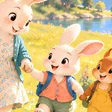

The Secret of Hakka Floral Cloth
About this story
Grandma’s Hakka floral cloth has peonies and phoenixes, and every flower has a meaning.
Open in FablehugRead the first page
During summer vacation, Tong went to Grandma’s house at the foot of the mountain.
Grandma opened her arms. “Se-moi-e (little girl), come here!”
What your child takes away
Hakka culture and language
Good to know for parents
Taiwan’s big red floral cloth used to be made into bedsheets, bundle wraps, and wedding dowry items, and later Hakka culture often used it as an emblem, so people call it “Hakka floral cloth”; the patterns on the cloth all have good meanings: the peony is the king of flowers and stands for wealth and a good life; the phoenix stands for good fortune and good luck; the tung flower blooms in April and May, with white blossoms covering hillsides and paths like snow in May, and it is a common flower in Hakka villages; Hakka words in the book include those for little girl, so pretty, eating a meal, and thank you; things that tear can be mended, and a patch is also part of a family’s story; if you do something wrong and are scared, say so, and a grown-up will help you; needles and scissors are sharp and can only be used with a grown-up beside you.


