
Toddler Tantrums: Why Kids Ages 2–6 Have Meltdowns and 6 Ways to Handle Them
Crying because the cookie broke, screaming because playtime is over, flopping down on the floor in the middle of the store… If your child's temper seems especially big lately, take a deep breath first: tantrums are a very normal part of growing up. They peak around ages 2–3 and usually start to ease off after age 4. It doesn't mean your child is turning "bad," and it doesn't mean you're doing a bad job.
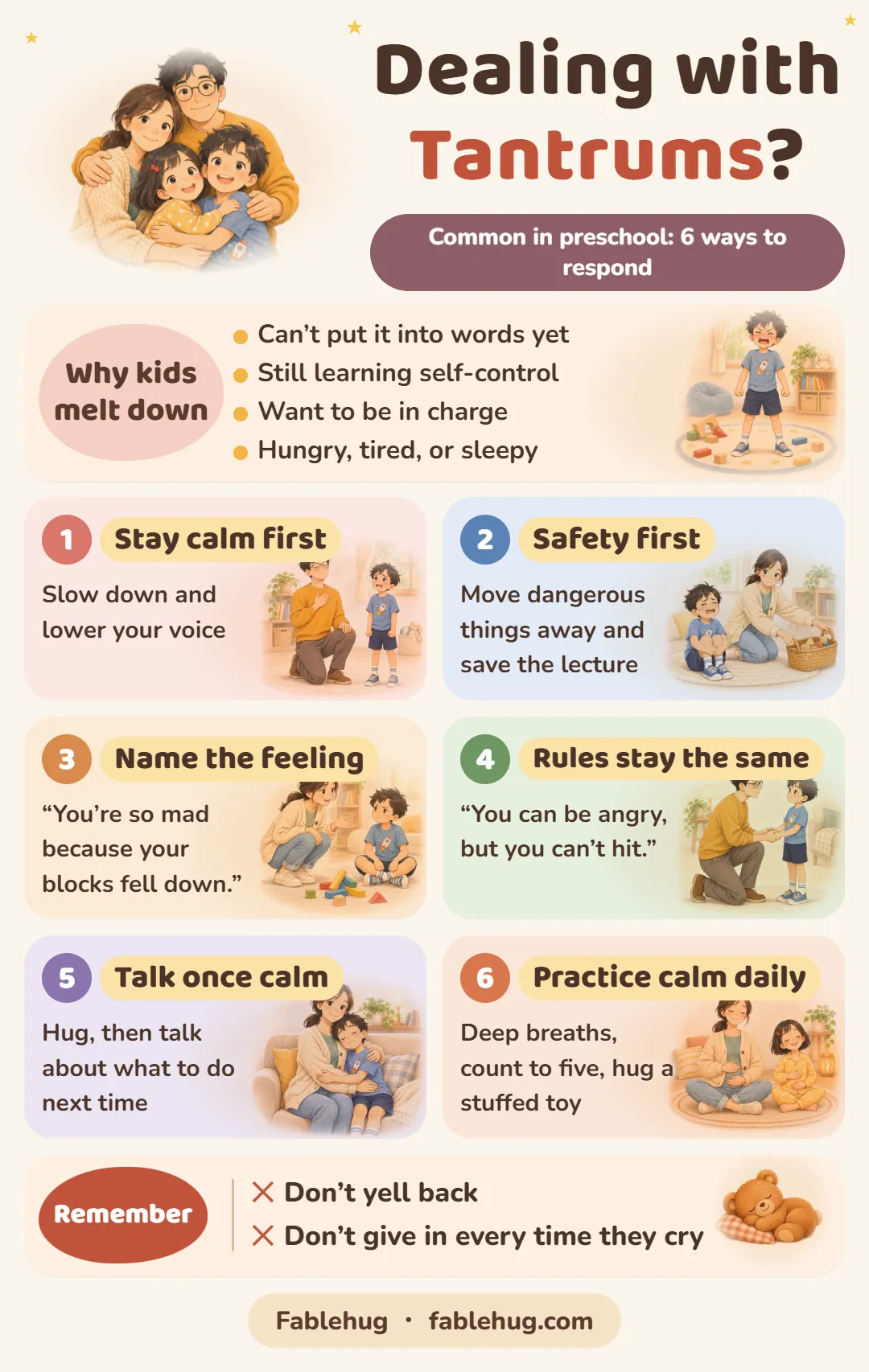
This article covers why kids have tantrums, what you can do in the moment and afterward, and a few picture books that help children understand anger.
Why Do Kids Have Tantrums?
- They can't put it into words yet: Kids have lots of feelings but not enough words. When they can't say it, they cry, yell or stomp instead.
- Their ability to manage emotions is still developing: Adults can usually hold back when they're angry. For kids, that skill is still growing, so once a feeling hits, it's hard to stop.
- They want to be in charge: Kids have more and more ideas of their own, and when things don't go their way, they're more likely to blow up.
- Their body isn't feeling great: Being hungry, sleepy, overtired or sick can make their patience very short.
- Things around them are changing: Starting preschool, a new baby in the family or a disrupted routine can bring stress that comes out as tantrums.
What Can Parents Do? 6 Ways to Help
1. Stay calm yourself first
When your child is melting down, what they need most is a calm adult. Slow yourself down and lower your voice. If the grown-up starts yelling too, the child usually just gets more worked up.
2. Safety first, feelings second
If your child is throwing things, hitting or might hurt themselves, move dangerous things out of the way and take your child somewhere safe. There's no rush to explain or reason. At the height of a tantrum, kids really can't take it in.
3. Help your child name the feeling
Use simple words to say it for them: "You're so angry because your blocks fell down." "You still want to play and don't want to go home, right?" When someone gets their feelings right, kids feel understood, and they gradually learn to use words instead of tears.
4. Accept the feelings, but keep the rules
All feelings are okay, but behavior has limits. You can say, "It's okay to be angry, but it's not okay to hit." Think it through before you say "no." Once you've said it, if your child is crying to get something, gently stick with your decision. Don't give in just because the crying gets louder, or your child will learn that "the bigger the fuss, the better it works."
5. Talk once things have calmed down
When your child has calmed down, give them a hug, then chat briefly about what just happened and what they could do next time they feel angry. This is when kids can actually listen, and they're more willing to figure things out with you.
6. Practice "calm-down tricks" in everyday life
When your child is in a good mood, practice together: deep breaths, counting to five, hugging a stuffed animal, or sitting in a quiet corner for a bit. You can also cut down on common triggers, like having a snack before going out, or giving a heads-up before leaving: "One more turn, then we go home."
Picture Books for Kids Who Get Angry Often
When kids see in a story what anger looks like, it's easier for them to talk about their own feelings, and they learn what they can do when they're angry:
- The Little Angry Volcano (Ages 2–3): Anger is like a volcano erupting. Whoosh—blow out the fire to make it smaller.
- The Mood Weather Report (Ages 2–3): Qingqing’s feelings are like weather: happy is sunshine, sad is rain, angry is thunder, and someone keeps her company while she waits for the sky to clear.
- Chameleon’s Storm-Cloud Tummy (Ages 3–4): When Chameleon gets angry, his tummy turns into a storm cloud, and he learns to stop first.
- The Robot Overheated! (Ages 3–4): Whenever Beebee the little robot gets angry, he overheats and smokes, so he learns to press the cooling button: take a deep breath and count to five.
- The Mood Thermometer (Ages 3–4): From calm to super angry, use the colors on the thermometer to say how you feel.
- When I’m Angry, I Can… (Ages 5–6): Things you can do and things you can’t do when you’re angry—spin the choice wheel.
For more books, see the "Anger" and "Naming feelings" topics.
Frequently Asked Questions
My child is having a meltdown in public. Should I just give in?
It's best not to agree to something you'd already said no to just to make the crying stop. Take your child somewhere less crowded, stay with them while the feelings pass, and then gently stick with your original decision.
Is it okay to ignore my child during a tantrum?
You don't have to respond to unreasonable demands, but don't let your child feel abandoned. Stay nearby and let them know, "I'm right here. We'll talk when you feel a little better," while keeping an eye on safety. But if your child is hitting, biting or throwing things, you can't ignore it. Step in right away, calmly and gently.
When should I get professional help for tantrums?
Typical tantrums gradually ease as children's language and self-control grow. If your child's tantrums are becoming more frequent or lasting longer, if they often hurt themselves or others, if it happens both at home and at school, or if it's affecting school or family life, talk to your child's pediatrician or a child psychiatrist. Seeing a doctor isn't about putting a label on your child. It's about having one more person on your side.
References
Once the skies clear, read a story together. Fablehug has 600+ picture books for ages 2–6, sorted by age, so you can pick stories that fit what your child is going through right now.


