
Picky Eater? Why Kids Ages 2–6 Refuse Food and 6 No-Pressure Ways to Help
"I'm spitting out the vegetables." "I only want plain rice." "That looks weird." Every mealtime feels like a battle. First, take a breath: picky eating is a very common stage between ages 2 and 6. Lots of kids go through it, and it doesn't mean you've done anything wrong.
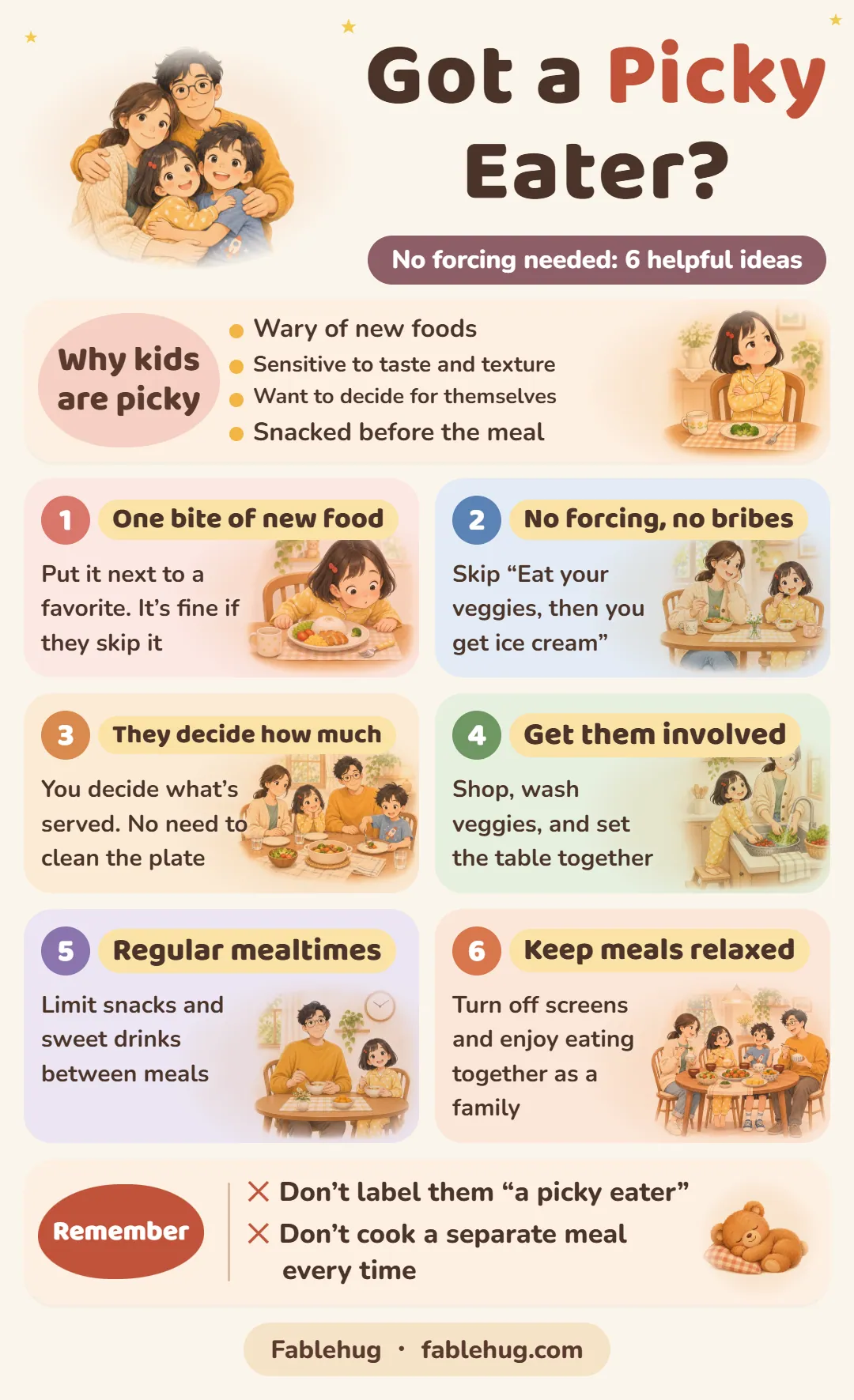
This article covers why kids become picky eaters, what you can do at the table, and a few picture books about eating to read together.
Why Are Kids Picky Eaters?
- They're wary of new foods: At this age, kids often say no to anything they haven't eaten before. It's a natural, protective reaction.
- They're more sensitive to taste and texture: Slightly bitter vegetables or soft, slippery textures may feel much stronger to a child than to an adult.
- They want to make their own choices: Kids are learning that "I can say no," and eating is one of the few things they get to decide for themselves.
- Appetite naturally changes: After the baby years, growth slows down, so eating less at some meals is perfectly normal.
- Snacks before meals: Too many crackers or too much juice, and of course they're not hungry when dinner comes.
What Can Parents Do? 6 Ways to Help
1. Start with one small bite of a new food
Put a small bite of something new next to foods your child already knows and likes. If they don't eat it, that's fine. Offer it again next time. Many kids need to see and touch a food 10 or more times before they're willing to try it, so this takes patience.
2. No forcing, no bribing, no labels
"You can have ice cream once you finish your vegetables" teaches kids that vegetables are a chore and dessert is the prize. Also avoid saying "He's just a picky eater" in front of your child, because kids can start to believe that's who they are.
3. You decide what to eat; your child decides how much
You're in charge of preparing balanced meals and deciding when and where to eat. Your child decides whether to eat and how much, listening to their own tummy. There's no need to insist on a clean plate.
4. Get your child involved
Shop for food together, wash vegetables, shell beans, and set out the bowls and utensils. Kids are usually more willing to take a bite of food they've touched and helped prepare.
5. Keep regular meal and snack times
Keep meals and snacks on a regular schedule, and don't hand out snacks and sugary drinks all day in between. If they're thirsty, offer water. Kids who come to the table a little bit hungry are more willing to eat.
6. Keep the table relaxed
Turn off screens and sit down to eat together as a family. Seeing you happily eat all kinds of food is the best example you can set. Chatting about a food's color, shape and the sounds it makes works better than constantly saying "Hurry up and eat."
Picture Books for Picky Eaters
When kids see a character bravely try a bite in a story, they often feel more like trying it themselves:
- A Tiny Bite, Let’s Try It (Ages 2–3): Priya takes just a tiny bite of every dish—yellow, green, white, orange—and, hey, it’s so yummy!
- Little Tapir’s Lunch Box with a Tiny Hole (Ages 3–4): Diandian meets a little piece of yellow egg: first look, then touch, then sniff. If not ready, say so out loud—and in the end, try one small bite.
- The Great Night Market Food Adventure (Ages 3–4): Walking the night market with Dad, tasting a little at every stall: oyster omelet, stinky tofu, braised snacks, and purple sweet potato balls.
- The Vegetables’ Secret Hideout (Ages 4–5): Little Bunny picks broccoli in the vegetable garden and is willing to take a bite of the one he picked himself.
- The Magic Cooking Class (Ages 4–5): In the magic cooking class, carrots turn into stars, green peppers into hearts, and the food you make yourself tastes best.
- Little Kitchen Helper Mission Cards (Ages 3–6): One card, one mission—from washing vegetables to setting out bowls and chopsticks, you finish dinner together.
For more books, see the "Eating & nutrition" topic.
Frequently Asked Questions
My child only eats plain rice and a few other foods. Are they getting enough nutrition?
Don't judge by a single meal. Look at what they eat over a whole week instead. Many kids eat little at some meals and a lot on other days. As long as your child has energy and is slowly gaining weight, it usually evens out overall. Keep putting a variety of foods on the table so your child has the chance to accept them over time.
If my child won't eat, should I cook something separate that they like?
It's best not to cook a separate meal every time. Instead, include one food your child is willing to eat in every family meal. That way they always have something to eat, and they still get the chance to see and try other foods.
When should I talk to a doctor?
If your child isn't gaining weight or is losing weight, eats a very small range of foods that keeps getting smaller, often chokes or gags while eating, frequently has tummy aches or constipation, or becomes very anxious at mealtimes, talk to your pediatrician. If needed, they can bring in a dietitian or other professionals to help.
References
Eating together matters more than a clean plate. Fablehug has 600+ picture books for ages 2–6, sorted by age, so you can pick stories that fit what your child is going through right now.


