
Child Won't Brush Their Teeth? Why Kids 2–6 Resist and 6 Ways to Help
"No brushing!" "I already did it!" Does every night turn into a toothbrushing battle? First, take a breath: it's very common for kids aged 2–6 to resist brushing their teeth. It doesn't mean you're doing something wrong.
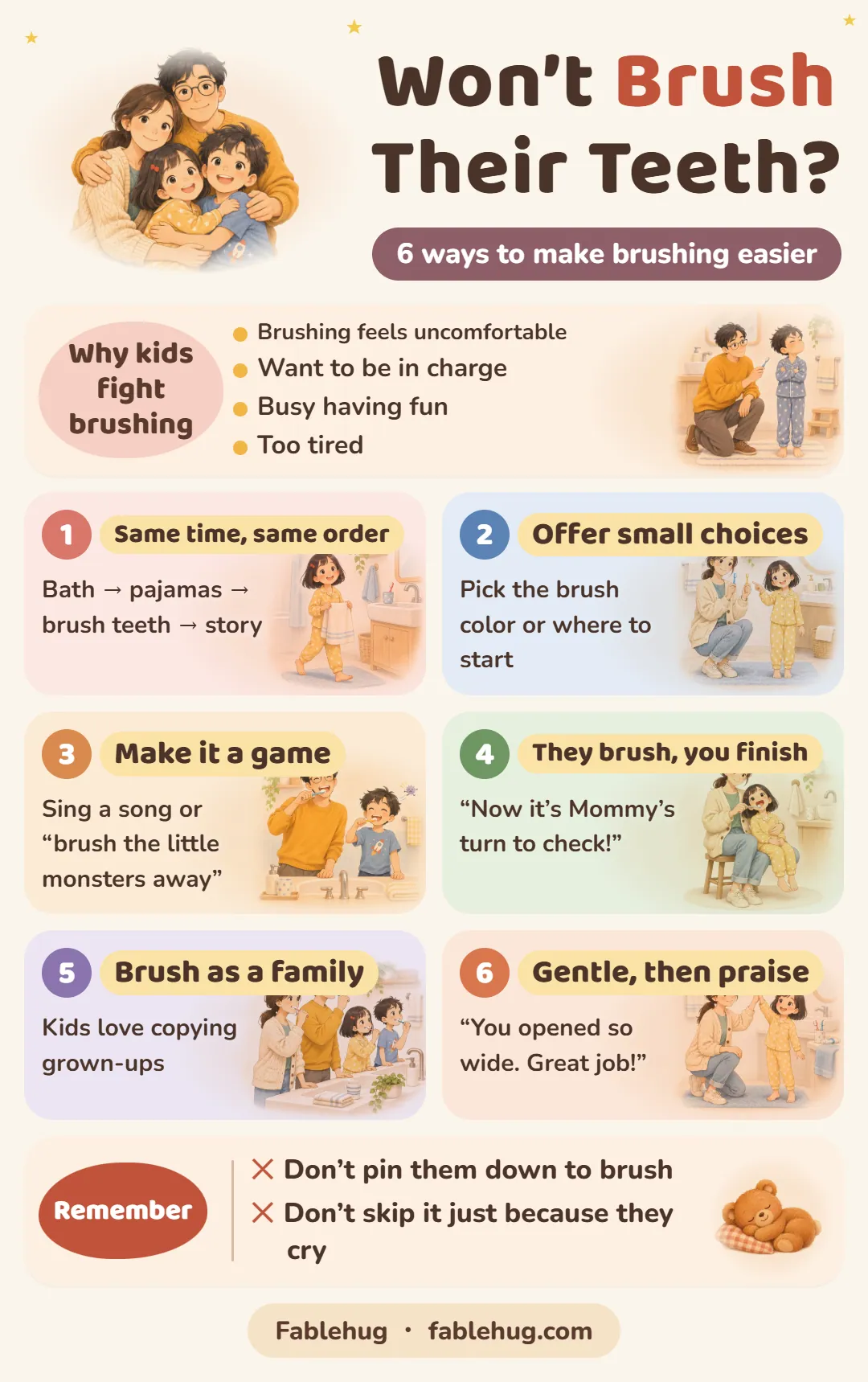
This article covers why kids refuse to brush, what you can do about it, and a few picture books about brushing to read together.
Why won't my child brush their teeth?
- It feels uncomfortable: A toothbrush moving around in their mouth, the taste of toothpaste, bristles on their gums. These can all feel strange to a young child.
- They want to be in charge: From around age 2, kids start wanting to "decide for myself." Brushing is something adults ask them to do, and saying "no" is how they practice having an opinion.
- They're having too much fun: Brushing often happens right before bed, which means stopping play and getting ready to sleep. No wonder they don't want to.
- They're too tired: In the evening their energy is low, and any request can set off big feelings.
- They don't get why it matters: Their teeth "look clean," so they don't understand what brushing is actually for.
What can parents do? 6 ways to help
1. Same time, same order
Make brushing part of your daily routine, like "brush after breakfast" or "bath, pajamas, brush teeth, story." When the order is the same every day, your child knows what's coming next and is less likely to negotiate every time. Brush at least twice a day, always before bed, for about 2 minutes each time.
2. Let your child make small choices
Whether to brush isn't a choice, but your child can choose other things: the blue toothbrush or the yellow one? Top teeth or bottom teeth first? Standing on a little stool or sitting on your lap? A bit of control makes kids more willing to go along with it.
3. Turn brushing into a game
Sing a toothbrushing song while you brush, or play "Let's see what's hiding between your teeth" or "Let's brush the little monsters off your teeth." When kids get caught up in the game, they're less focused on saying "no." Even while playing, have them stand or sit still, and don't let them walk around with the toothbrush in their mouth.
4. Let your child brush first, then an adult finishes
Let your child hold the toothbrush and practice first, so they get to feel "I can do it myself." Then say, "Now it's Mom's or Dad's turn to check," and brush their teeth clean for them. Kids' hand skills are still developing, so they need an adult to help brush or check until around age 7 or 8.
5. Brush together
Kids love to copy. Brushing side by side as a family and checking whose teeth are the sparkliest works better than just telling your child to brush.
6. Be gentle, and praise them afterward
Choose a children's toothbrush with soft bristles and a small head, and brush gently. Use a fluoride toothpaste with at least 1000 ppm fluoride: about a grain of rice for under 3s, and about the size of a pea for ages 3–6. An adult should squeeze out the toothpaste and keep the tube where your child can't reach it. After brushing, your child just needs to spit, with no need to rinse with lots of water. Afterward, tell them exactly what they did well, like "You opened your mouth so wide today, great job!" That way brushing feels like something to be proud of.
Picture books for kids who don't like brushing
Reading stories about brushing lets kids "figure out" brushing in a book first, before it's their turn:
- The Toothbrush Does the Cha-Cha (Ages 2–3): Diego and Grandma follow the music: brush, brush on top, brush, brush on the bottom, and the toothbrush does the cha-cha!
- The Magic Toothbrush (Ages 2–3): The little wizard waves a toothbrush wand—brush, brush on top, brush, brush on the bottom—and the cavity monsters run away.
- The Princess’s Tooth Castle (Ages 3–4): The princess’s teeth are like a castle, the candy monsters come to attack, and the brushing knight protects it.
- Yaya the Hippo’s Tooth Explorers (Ages 3–4): The toothbrush explorers find the bits of food stuck between the teeth.
- The Tooth Fairy’s Secret (Ages 4–5): The Tooth Fairy says: shiny teeth come from brushing every day.
- My Tooth Fell Out! (Ages 5–6): Little Crocodile’s first wiggly tooth falls out, and the new tooth needs good care.
For more books, see the "Brushing, bathing & handwashing" topic.
Frequently asked questions
My child cries and refuses. Should I brush their teeth anyway?
If your child is very upset, you can stop for a moment, give them a hug, and brush once they've calmed down a bit. But brushing is something that needs to happen every day, so it's best not to skip it entirely because of tears. Using games, giving choices, and having an adult finish the job usually makes things go more smoothly over time.
My child wants to brush by themselves. Can I just let them?
You can let your child brush first. It helps them practice the movements and build the habit. But kids can't brush thoroughly on their own until around age 7 or 8, so it's best for an adult to brush once more or check at the end.
When should I take my child to the dentist?
You can take your child to the dentist once their teeth come in, with the first visit by age 1 at the latest. After that, a checkup about every six months helps your child get used to the dentist from an early age. In Taiwan, preschool children can get a free fluoride varnish every six months, which helps prevent cavities. If you notice dark spots or discoloration on their teeth, your child says their teeth hurt, or their gums are often red, swollen, or bleeding, see a dentist or pediatrician as soon as possible.
References
After brushing, read a story together. Fablehug has 600+ picture books for ages 2–6, sorted by age, so you can pick stories that fit what your child is going through right now.


