
Crying at Preschool Drop-Off? Separation Anxiety in Ages 2–6: Why It Happens and 6 Ways to Help
"Mommy, don't go!" "I don't want to go to school!" Every morning ends in tears at the door, and it breaks your heart too. First, you can relax a little: crying when starting preschool is a very common part of settling in. It shows how close your child feels to you, and that they are learning to cope with a new place.
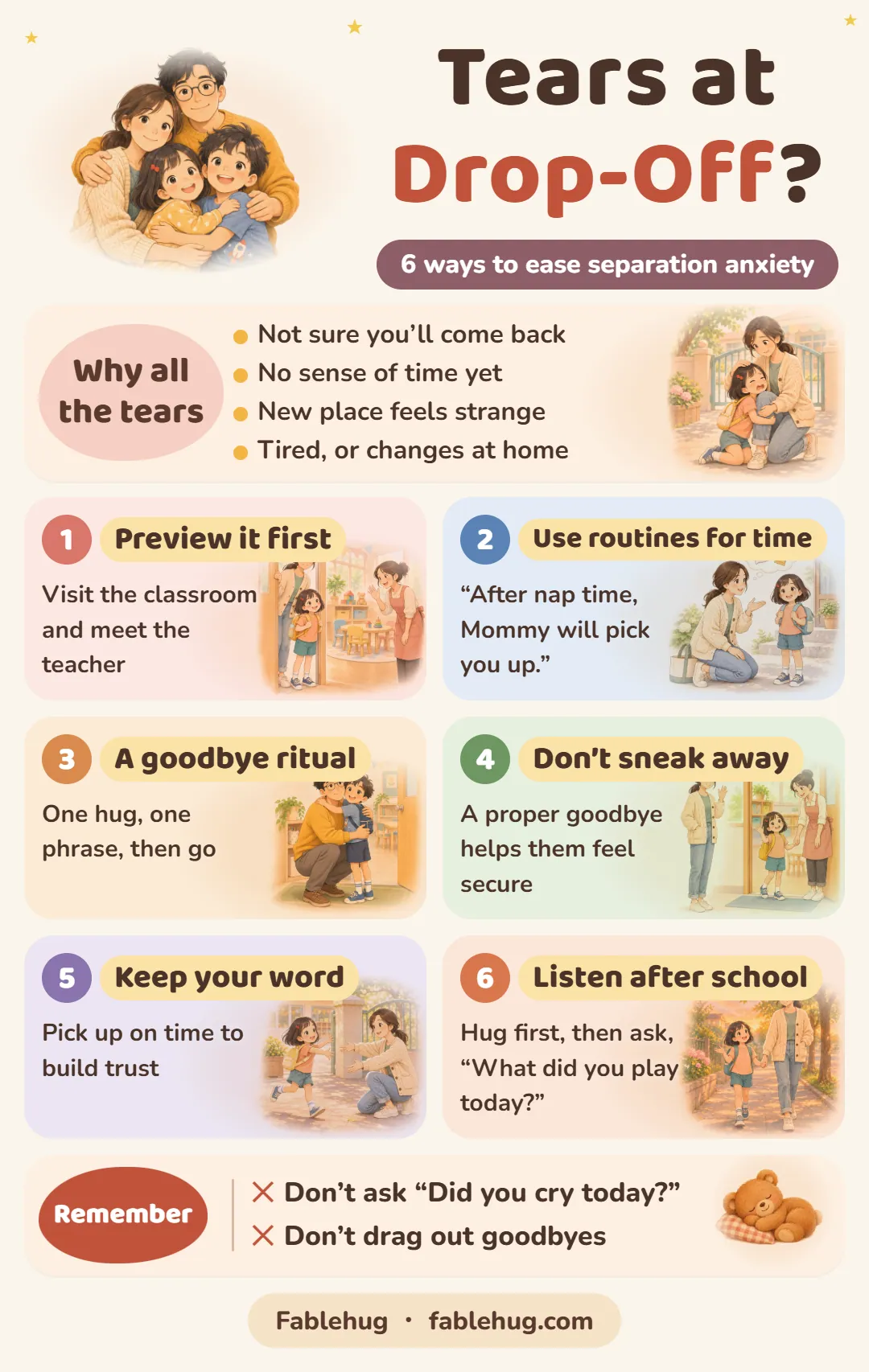
This article explains why children cry, what you can do at goodbye time, and a few picture books about starting school to read together.
Why does my child cry so much at school drop-off?
- They're not yet sure you'll definitely come back: You know you'll be there at pickup, but your child is still building that trust.
- They don't understand time yet: "I'll pick you up this afternoon" feels abstract to a young child, so it seems like you'll be apart for a very long time.
- The new place feels strange: New teachers, new kids, new rules. Everything has to be learned from scratch, so feeling uneasy is natural.
- They're tired, or something has changed at home: Not enough sleep, just getting over an illness, a new baby, or a move can all make separation harder.
How can parents help? 6 ways
1. Talk about it ahead of time so your child knows what to expect
Before school starts, chat together about what school is like, and if you can, visit the classroom and meet the teacher. The night before, go over tomorrow's routine one more time. When your child is prepared, they're less likely to feel caught off guard.
2. Use the daily routine to explain when you'll pick them up
Instead of just saying "I'll be back soon," try "You'll play, have a snack, take a nap, and then Mommy will come get you." Counting time with things they already know helps children feel more secure.
3. Keep a short, consistent goodbye ritual
A hug, a kiss, the same few words, and then you go. When it's the same every day, your child learns that "after this, Daddy goes to work." Dragging out the goodbye actually makes it harder for your child to let go.
4. Don't sneak away
Slipping out when your child isn't looking may seem easier in the moment, but when they notice you're gone, they'll feel more scared and may become even clingier. Say a proper goodbye so your child knows you won't suddenly disappear.
5. Keep your word and pick them up on time
When you promise a time, stick to it. This matters most in the first few weeks: every time you show up on time, you're telling your child, "When Mom and Dad say they'll come, they always do." Also, avoid popping back in during the day to check on them, as this can make settling in harder.
6. Really listen after school
When you pick your child up, start with a hug. Instead of rushing to ask "Did you cry today?", try "What did you play today?" or "What did you have for snack?" This helps your child focus on the fun parts of school.
Picture books for children starting preschool
Reading stories about "going to school, being apart, and seeing each other again" before and after school starts lets your child practice it once in a story first:
- Little Chick’s First Day of School (Ages 2–3): On the first day at preschool, Little Chick plays, has a snack, takes a nap—and then Mommy comes to pick Little Chick up.
- Mommy Will Come Back (Ages 2–3): Mommy goes to work. Kitten plays, has a snack, and takes a nap—and Mommy is back.
- See You This Afternoon, Wave Goodbye (Ages 2–3): On Molly’s first day at day care she plays in the sand, has a snack, and takes a nap, and when the door opens, both her dads are there!
- I Don’t Want to Go to Preschool (Ages 3–4): Little Elephant cries in the morning, so he brings Mommy’s little handkerchief and they agree she will pick him up in the afternoon.
- Little Quokka’s Pocket Promise (Ages 3–4): On the first day of school, there is a promise with Dad in Little Quokka’s pocket.
- The Robot Who Didn’t Want to Go to School (Ages 4–5): Little Robot is so nervous on its first day of school, and Lele holds its hand and goes into the classroom together.
For more books, see the "Separation anxiety" topic.
Frequently asked questions
How long will my child cry at school before it gets better?
Every child is different. Some get used to it in a few days, while others take several weeks. Many children gradually calm down within about 10 minutes after their parent leaves. It's also common for a child to do well for a few days and then start crying again, for example after a long break or after being sick. As long as things are slowly improving overall, there's no need to worry too much.
Can my child bring a comfort item to school?
Check with the teacher about the school's rules first. If it's allowed, a small handkerchief, a family photo, or a little stuffed animal can give your child something to touch or look at when they miss home, helping them feel more settled.
When should I talk to a professional?
If after more than a month your child is still crying hard every day with no improvement at all, or if they often complain of tummy aches or headaches before school, aren't sleeping well at night, or become extremely afraid of even short separations from family, to the point that it affects daily life, consider talking with your pediatrician or a child mental health professional.
References
Say a good goodbye, and promise a good "see you soon." Fablehug has 600+ picture books for ages 2–6, sorted by age, so you can pick stories that fit what your child is going through right now.


