
How to Choose Bedtime Stories and Build a Bedtime Routine for Ages 2–6: 6 Simple Tips
"Just a little more playtime!" "One more book!" "I'm not tired!" If bedtime turns into a tug-of-war every night, don't be too quick to blame yourself: children ages 2–6 naturally find it hard to switch from "play" to "sleep" on their own. They need a grown-up to help build a bridge.
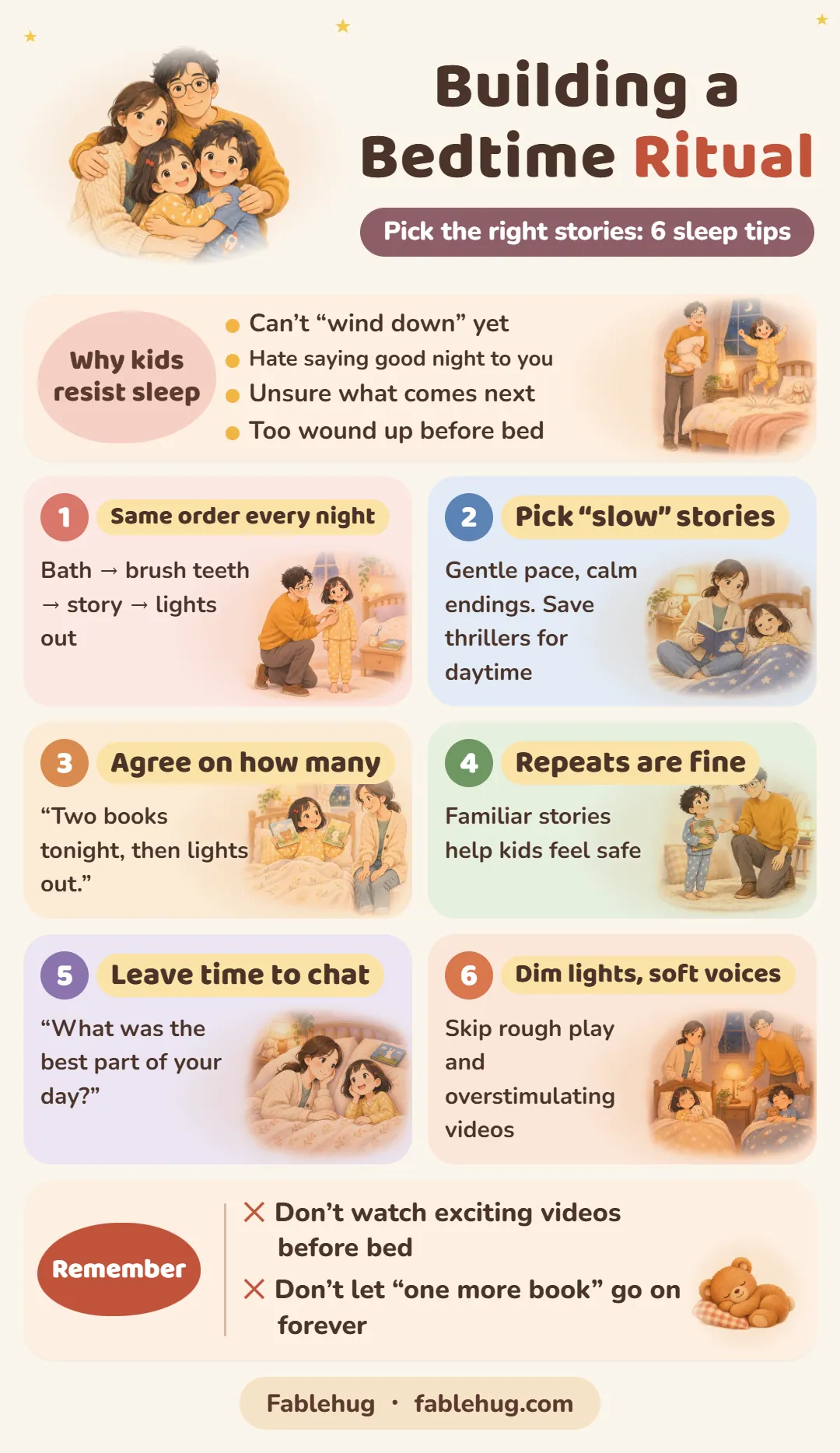
Bedtime stories make a great bridge. This article covers how to choose bedtime stories, how to build a bedtime routine, and a few picture books that are perfect for reading together before lights out.
Why Does My Child Never Want to Go to Bed?
- They're still learning to "slow down": When kids are having fun, their bodies and feelings are still running at full speed, and they need some time to settle.
- They don't want to leave you: For many kids, bedtime means "my time with Mom and Dad is over for today." Stalling is often just a way to stay close a little longer.
- They don't know what comes next: When the order changes every night, kids are more likely to keep bargaining.
- Too much excitement before bed: Chasing games, wild play, and loud, flashy videos can all make it harder for kids to fall asleep.
What Can Parents Do? 6 Tips
1. A set order is easier to stick to than a set time
Start by deciding on an order, for example: bath, pajamas, brushing teeth, story, saying good night, lights out. When you follow the same order every night, your child learns that "after the story comes sleep," and the tug-of-war gradually eases. Try to keep bedtime about the same each night, without big changes on weekends.
2. Choose "slow" bedtime stories
Bedtime is a good time for stories with a slow pace, repeated lines, and a calm ending. Save stories that are too exciting, too tense, or full of chasing and fighting for the daytime. For younger children, pick books with just a sentence or two per page and a line that repeats again and again; older children can enjoy stories with a bit more plot, as long as they end gently.
3. Agree on how many books ahead of time
"Tonight we'll read two books, and then it's lights out." Say this clearly before getting into bed, and you can let your child choose the books. Kids who get a say are more willing to stick to the deal. If they ask for more afterward, say "We'll read it tomorrow," gently but firmly, so you don't have to negotiate all over again every night.
4. Reading the same book many times is perfectly fine
Kids often want to hear the same book over and over, and that's normal. A familiar story makes them feel safe, and knowing what happens next helps them relax. If you're tired of it, take turns reading with another adult, or let your child help say the next line.
5. Leave a little "chat time" after the story
Before turning off the light, share just two or three sentences: "Do you think Little Bear is sleeping well?" "What was the best part of your day?" There's no need to press for answers or give a lesson. It simply lets your child know you're listening. Some kids will share things at this moment that they didn't say during the day.
6. Make the room dim and quiet before bed
During story time, switch from the overhead light to a soft lamp, lower your voice, and speak more slowly. Try to avoid rough play and exciting videos before bed. The general advice is no screens for 30–60 minutes before bedtime. If you read picture books with your child on a tablet or phone, put that early in the bedtime routine, keep a soft light on in the room, turn the screen brightness down, and read together with your child. Then, right before lights out, switch to talking or singing a song.
Picture Books for Bedtime Reading
Pick a few stories about "saying good night" or "getting ready for bed" to help your child connect reading with sleep:
- Good Night, Little Feet (Ages 2–3): From toes to eyes, we say good night to each body part, one by one, and the body slowly relaxes.
- Shh, the House Is Going to Sleep (Ages 2–3): Oscar and Daddy say good night to the floor lamp, the clock, and the little potted plant one by one, until only the moon keeps him company.
- Dinosaur Babies Say Good Night (Ages 2–3): Baby T. rex and baby Triceratops brush their teeth, drink water, lie down, and say good night to Dinosaur Mommy, one by one.
- I Don’t Want a Nap (Ages 3–4): Lele refuses to nap and plays until sleepy eyes and a bad mood show that a body needs rest.
- Why Do We Sleep? (Ages 4–5): While you sleep, little workers in your body fix things and tidy up so you have energy tomorrow.
- Little Badger’s First Room (Ages 4–5): Little Badger has grown bigger, and Mommy and Daddy dig a little room of his own in the burrow. The first night is too quiet, the second night is too dark, and the third night the bed seems too big. Little Badger has to find, a little at a time, ways to make his own room feel warm.
For more books, see the "Sleep" topic.
FAQ
My child keeps asking for "one more book." Should I say yes?
Agree on the number of books in advance, and turn off the light as promised once you're done. If your child really wants to hear more, you can say, "We'll read this one first tomorrow," so they know the story isn't going anywhere. It's fine to bend the rule now and then; what matters is following the same rules on most nights.
How long should bedtime stories be?
They don't need to be long. A whole bedtime routine of about 30 minutes, with 10–15 minutes of reading and one or two books, is plenty. For children ages 2–6, consistency and relaxation matter more than length. Adjust to your child's attention span and how tired they are that day. If you enjoy reading together and they go to sleep afterward, that's just the right length.
We already have a bedtime routine, but my child still has trouble falling asleep. What now?
New habits take time, and you usually need several nights in a row before you see results. If your child has trouble falling asleep for a long time, wakes up often at night, or their daytime energy and mood are clearly affected, it's a good idea to talk with your pediatrician. If it seems related to anxiety or fears, you can also consult a child mental health professional.
If your child snores often, or seems to pause breathing or struggle to breathe while asleep, take them to the pediatrician as soon as possible.
References
- American Academy of Pediatrics, HealthyChildren.org: Brush, Book, Bed: How to Structure Your Child's Nighttime Routine
- NHS (UK): Sleep and young children
- Ministry of Health and Welfare (Taiwan): Blue light from screens affects children's eyesight: get outdoors and away from screens! (in Chinese)
- American Academy of Pediatrics, HealthyChildren.org: Sleep Apnea in Children: Detection & Treatment
Read one book every night, then say good night. Fablehug has 600+ picture books for ages 2–6, sorted by age, so you can pick stories that fit what your child is going through right now.


