
When to Start Potty Training? Readiness Signs and 6 Tips for Ages 2–6
"The neighbor's child was out of nappies at two. Is mine behind?" Lots of parents worry about this. The good news is that there's no right age to stop using diapers. Every child gets ready at their own pace, and earlier or later are both very common. Most children can use the toilet on their own during the day by age 4.
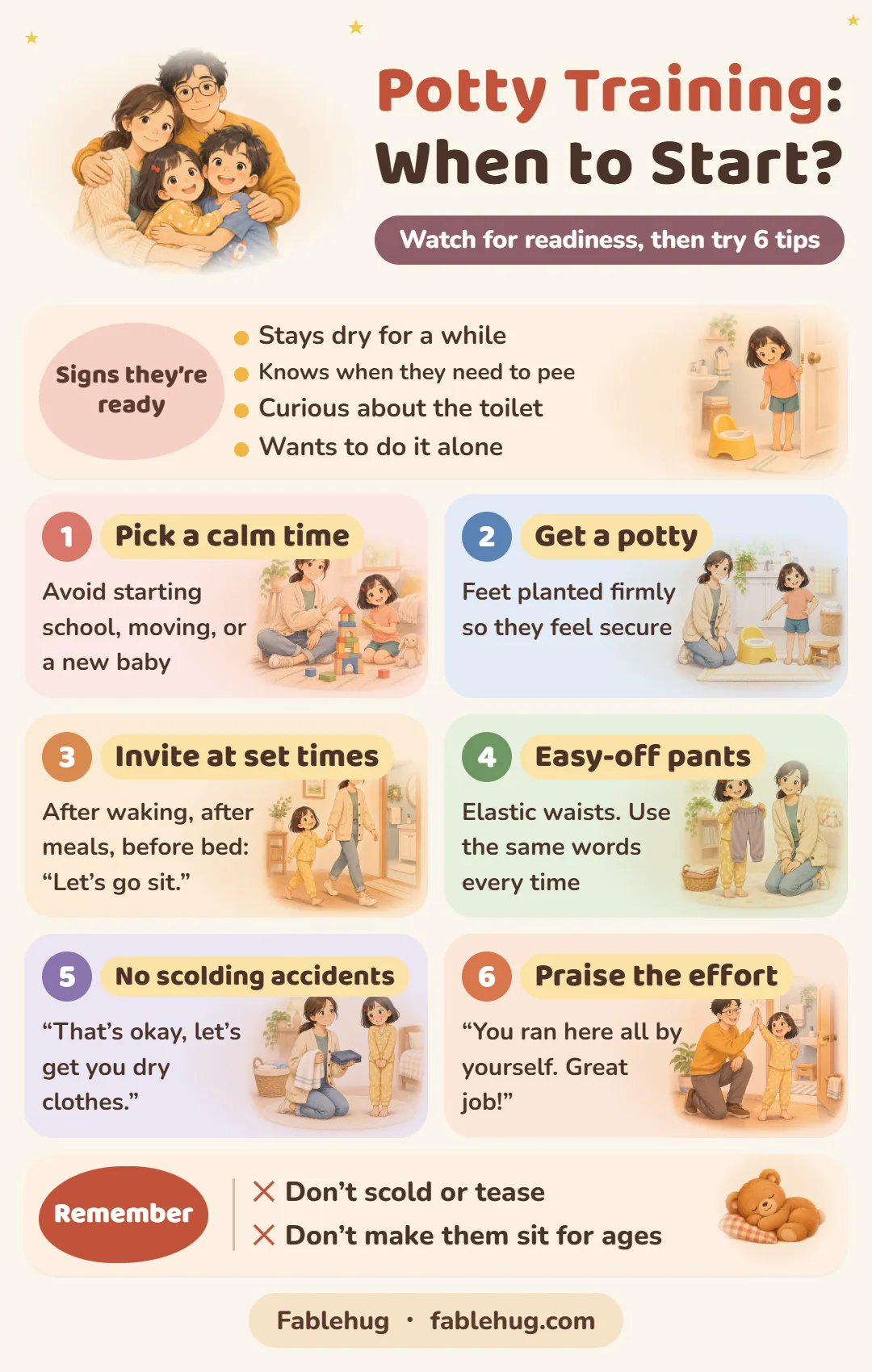
This article covers how to tell if your child is ready, how you can support them, and a few picture books about using the toilet to read together.
When to Start? Look for These Readiness Signs
Many children start showing the signs below somewhere between about 18 months and 3 years, but the timing varies a lot. These signs matter more than age:
- Staying dry for a while: For example, the diaper is still dry after a nap. This means the bladder is starting to hold on a little.
- Knowing when they need to pee or poop: They stop what they're doing, hide in a corner, tug at their pants, or tell you with words or gestures.
- Showing interest in the toilet: They want to follow you into the bathroom or watch you flush.
- Understanding simple instructions: Like "Let's go sit on the potty" or "Pull your pants down."
- Wanting to do it themselves: They say "Me do it!" and start pulling their own pants down.
If you haven't seen these signs yet, there's no rush. You can start by letting your child get used to the potty, sitting on it with clothes on. The key is not to push. Pushing often makes children resist even more.
How Can You Help? 6 Tips
1. Pick a calm time to start
Starting preschool, moving house, a new baby in the family: at times like these, your child already has a lot going on. Wait until life feels more settled, and your child will find it easier to learn.
2. Get a potty or a child toilet seat
You can use a potty, or add a child seat and a step stool to the regular toilet. When their feet are steady and they feel secure, children can relax. Let your child help choose, and they'll be more willing to sit.
3. "Invite" them to sit at regular times
After waking up, after meals, before going out and before bed, ask in a relaxed way, "Shall we go sit for a bit?" A few minutes is enough. It's fine if nothing comes out, and try not to keep hurrying them.
4. Choose easy clothes and simple words
Pants with elastic waists are easier to pull down, so your child has time to manage on their own. Use the same words across the family, like "pee" and "poop," so your child can tell you more easily.
5. Don't scold accidents
Wet pants or not making it to the toilet in time are completely normal while learning. Calmly say, "That's okay, let's get you into something clean," and tidy up together. Scolding or laughing only makes children tense and more likely to hold it in.
6. Praise the effort, not just the success
"You felt you needed to pee and you ran over here, well done!" works better than only saying "Well done for peeing." Your child learns that they're getting there, one step at a time.
Picture Books for Potty Training
Reading stories is a great way to start. When children see characters in a story practicing too, they realize, "Oh, everyone has to learn this":
- The Body Knocks: I Need to Pee! (Ages 2–3): The body knocks, and Amani says loudly, “I need to pee!” and runs thump-thump-thump to sit on the little potty.
- Pee Superhero (Ages 2–3): Kai puts on a superhero cape and dashes to the toilet whenever his body sends the signal: “Mission accomplished!”
- The Tinkle Bell (Ages 2–3): When the little bell in Little Penguin’s tummy rings, off he runs to the toilet. And it’s okay if he doesn’t make it in time.
- Little Bunny’s Potty Practice (Ages 3–4): A diaper is so inconvenient on a picnic, so back home Little Bunny practices using the toilet, step by step.
- I Can Use the Toilet by Myself (Ages 3–4): Pull down pants, sit down, wipe clean, flush, wash hands—Yuyu goes step by step, all by himself.
- Capybara’s Clean Little Tail (Ages 3–4): After using the toilet, Capybara wipes clean and washes his hands all by himself.
For more books, see the "Using the toilet" topic.
Common Questions
They're dry during the day. Can we stop diapers at night too?
Staying dry at night usually comes much later than in the daytime, because the body is still learning to hold urine during sleep. It's fine to keep using a diaper at night after your child has learned in the daytime. Once the diaper is often dry when your child wakes up in the morning, try going without it.
My child will pee in the toilet but won't poop there. What can I do?
This is very common. Some children are afraid of the poop falling in, scared of the flushing sound, or have had painful poops before. Don't force it. You can let them sit without flushing, with their feet steady, and offer plenty of water, vegetables and fruit day to day so poops are softer and less scary. If poops are hard and dry like little pebbles, or your child strains hard every time or it hurts, see a doctor first to check for constipation, and continue practicing once that's sorted.
When should I talk to a doctor?
If peeing hurts, your child suddenly needs to pee much more often, is often constipated or has very hard poops, suddenly starts having lots of accidents after being dry for several months, or is still often wet during the day or regularly wetting the bed after age 5, talk to your child's doctor. Find out what's going on, then keep practicing slowly.
References
Take it step by step, and your child will get there. Fablehug has 600+ picture books for ages 2–6, sorted by age, so you can pick stories that fit what your child is going through right now.


